
Claire McCarthy The Waiting City Interview
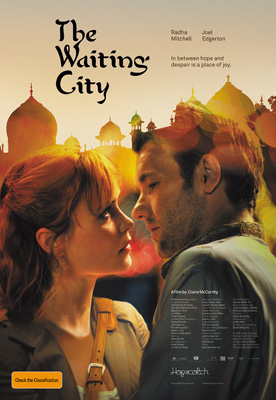
INTERVIEW WITH CLAIRE McCARTHY (DIRECTOR)
The Waiting CityStarring: Radha Mitchell, Joel Edgerton, Isabel Lucas, Samrat ChakrabartiDirector: Claire McCarthy
Running Time: 108 minutes 11 secs
Directed by Australian rising talent Claire McCarthy, THE WAITING CITY tells the story of an outwardly happy Australian couple who journey to India to collect their adopted baby. When they arrive in Calcutta they discover that the adoption arrangements have still to be finalised. Soon the intoxicating mystic power of the city pulls them in separate and unexpected directions and the vulnerability of their marriage begins to reveal itself. The first Australian feature film to be shot entirely in India, THE WAITING CITY is an intimate, complex love story of transformation, set against the exhilarating epic backdrop of Calcutta.Can you explain Ben's character?
Claire McCarthy: Ben is a struggling artist really. He was a musician in a former life, and when we find him in the story he'ssomewhat broken as a man. He has experienced success as a musician, and he has reinvented himself as amusic producer, so he's grappling with ways to be able to express himself in a different way, as an older manwho's now not successful as a musician. He's a man that has so much potential, but often won't allow himself tofulfill that.
So he's very talented but he's suffering from a bit of writer's block, artistic block. When he comes to Calcutta,he's exposed to a lot of new expressions, new ideas, and starts to have a change of heart about the way he seeslife. He also suffers from depression, so that's a little thread throughout the story as well, about how he dealswith depression, and how Fiona relates to him with that as well.
He's a character who's in some respects a 'man child'. Without trying to reduce the character or anything likethat, he really is a character who's an amalgam of a boy and a man. Through the journey of the film, he steps upto fatherhood and he steps up to being a husband in a way that Fiona needs him to be and in a way that heneeds to be to be a complete person. That's kind of the essence of his journey.
What is the essential difference between Ben and Fiona? Not only that they're man and woman, butwhat is the basic difference in how they look at life?
Claire McCarthy: Fiona's a lot more driven and ambitious than Ben. She's a powerful, almost volatile character. She'sfought with a lot of judgments and misconceptions at the beginning of the story, and I guess her journey is asoftening to life and the city of Calcutta and also to her marriage to her husband. For Fiona there's an opening; asense of acceptance and surrender to things she was always trying to control. So I guess she's a very powerful,strong, woman, who is still able to balance her priorities, but sees life from a different vantage point by the end ofthe film. So the intrinsic differences between them are almost a rebalancing of the opposites of the two of them,and being able to see them as part of a whole - as husband and wife; man and woman.
Tell us about Radha Mitchell playing Fiona's character.
Claire McCarthy: I've always thought she was an incredible actress and I've wanted her from the very start. Her family's quiteinterested in India, they're "India-philes" and she has an Indian name. Apart from that, I wanted an actress thatwould understand India from the inside - who had lived there, had experiences, understood it from theperspective of an insider, so that we could construct a performance that would be able to be seen from theoutside, then bring it into that very deep place it needed to reach by the end of the film. So that was reallyimportant to me, that there was an actress that had the range that she has, the dynamism that she has, and alsohad an understanding of India. It was a blessing to have her, it was a blessing that she came to us, and it's beenabsolutely amazing working with her. Her sense of play, and the trust we have between us, and thecollaboration that we've had all the way through, has just been absolutely a dream relationship, I couldn't haveasked for more. She's just given gold in the film, and her contribution has been absolutely valuable.
And about Joel Edgerton, who plays Ben?
Claire McCarthy: Joel was a little bit more difficult to cast. The character of Ben had to be likeable, even though his traits arequite difficult - he has depression; he's broken and in some ways he suffers from creative block and he was alsoformerly this other person in another life - this younger, famous, musician-person. So I needed to find someonewho was likeable and had a sense of play; and that we would like from the very beginning. This was alsoimportant for Radha's character too - that we see them both as being people we could relate to and want to goon a journey with. That we wouldn't go, ugh, these guys are just people that we're not interested in watching,because they're just whining all the time, or they're ugly, the way that they see life and the way they react tothings is ugly.
But the thing with Joel is that he's so funny, he's so likeable, and he's got such dynamism about him, but he'salso got a lot of depth as an actor. Plus he's always inventive, and he approaches things from a very clever, veryingenious viewpoint and he never does anything 'literally' - which is very important to me, for his character, forthe film, for the way that he's written it. A lot of the time we're playing things for subtext - something's written onone level, but we're playing it underneath that for another intention.
It was quite complex constructing performances with those two actors so we could make sure the audience wasnever just on the surface. We're always dancing between the literal and the underneath, the subterraneousmeeting of the story, so we could drive the narrative forward.
Also Joel has a fantastic singing voice. That's the other thing that was really important - that he could be amusician and convincingly play a guitar, had a good singing voice and could carry the songs that were needed inthe film. He had to be able to convincingly jam with local musicians because music's quite an importantcomponent of the film; musical and creative expression was important. So he was a godsend. And I've alwaysreally loved Joel's work; I've always had my eye on him. But I think this role has really shown him in his fulldimension. I think it's interesting seeing how he's embraced things that perhaps other roles haven't given him -it's given him a chance to show his darker side as well as comedy, and his musical talent.
Let's come to Scarlett then, her character, and why Isabel Lucas in that role?
Claire McCarthy: Isabel I think is just a magic, beautiful, young actress. I think she's just absolutely ethereal and I think it wasvery important for the story to have this fresh, young woman who would be a foil for Fiona in some ways - anoffset or a mirror to her, but also in some ways challenge and provoke the marriage further. We go everywherein the marriage, hopefully every edge of the marriage is explored in the film. So Isabel was the perfect choice forme because she's just a fantastic young actress, and she's also very likeable as well. She's complex, and deep,and was never going to play the role two-dimensionally, which was very important to me. That she could bringhumour and lightness to it and humanity as well. So I think she's done that, absolutely. It's been beautifulworking with her.
And finally, Samrat Chakrabarti who plays the character of Krishna?
Claire McCarthy: It was difficult to cast Krishna because I was torn between casting someone who was a native actor living inCalcutta or if I should go for someone else. He is from Calcutta originally, but his parents now live in America andhe's been quite successful in America. He does speak Bengali and he does have a strong connection to the city.The thing that I liked about him is that he is very versatile and he has a very earthy, strong connection to Calcuttaand it gave me the permission to be able to work with him, both articulating the character, and figuring out how tosculpt that with him, but being able to also speak with him from the perspective of being an outsider.
We're both outsiders in some respects. Although his heritage is here and he has a viewpoint on the city which Ithought was important in order to understand Krishna the character and be able to bring something to it thatwould be clearly defined. So it was a tough to find Krishna, but I think Samrat is an interesting choice; he'ssomeone who's brought something interesting to the character and he's also very funny without being twodimensional.So I think he was a great choice.
How do you see Calcutta's role in the film? How did it contribute to the journey of Ben and Fiona? Tell usabout the City of Calcutta.
Claire McCarthy: Well yes Calcutta is a character in the film. It's an antagonist and a protagonist. It embraces the charactersby the end of the film, but because of the differences in the two characters there's sometimes conflicts in ideas ormisconceptions about what the city is offering them or showing them. It exposes them too, particularly Fiona'scharacter.
From my point of view, I wanted to explore a three-dimensional view of the city and one of the things I find quiteintriguing about Calcutta from a Western perspective is the strong living history of Calcutta, as well as itsprojection into the future. It's a city that has both; it's dancing between two ideas of itself in a way. There's thisstrong imperialistic colonial history and there's these beautiful buildings that are crumbling relics of a time gone.But then there's this burgeoning new city that's cosmopolitan and international. There's technology and all kindsof things that are coming in to shape the city and there's a very strong burgeoning middle class.
A lot of the film was set inside a five star hotel and we show there's this generic, almost Western, viewpoint ofthe city. Initially, a bubble if you like. Then we slowly progress through different locations as they go on theirjourney and move towards meeting Lakshmi, their child. So we look at different aspects of Calcutta and eachone is meant to be a different viewpoint of the city.
I think when you ask that question about Calcutta being a character, I think it's important to say that the film hasa poetic realism to it, so although there's a lot of documentary techniques that are used in the film, working withnon-actors, working with real locations, shooting observationally, or semi-verite, as well as formal, constructed,drama coverage, the film explores Calcutta through a poetic eye. It's never intended to be a documentary aboutCalcutta. It's a poetic viewpoint of the city, so although we are in real locations and although we are usingdocumentary techniques with the intention of making the film as real and as authentic as possible, there is astory to be told, and it is told through a poetic viewpoint.
So Calcutta is a character - and it's set at the time of Durga Puja (the festival celebration of the Hindu Goddess,Durga) so when the characters arrive they're experiencing the city at a time that is very different to other times.The city is constantly alive, particularly at night. There's all sorts of pujas being celebrated and fireworks andpeople are in their trucks taking their Puja down to the ghats. There's such a lively atmosphere within the city -it's contagious. The atmosphere within the city at that particular time of year, it was important to me, because ofthe thread of Durga throughout the film. I really wanted there to be a sense that the city was a character, not justbecause of its buildings, or the history itself, or the living history of the city, but also because of this distinctfestival that was happening at that time.
And the characters view all this activity from one viewpoint at the beginning of the film, and slowly becomeintegrated into it as the film progresses and change their viewpoint on things. So when I'm talking about thatpoetic viewpoint, it's about how that intersection of the city and all it has to offer overlaps with the journey of thecharacters, and how that changes them. So there's a few distinct things about the city at that time of year that'simportant.
How about shooting in the city? How did you communicate with non-actors who didn't even understandEnglish? That must have been a very challenging thing?
Claire McCarthy: It was. But I think there is a universal language I believe, between artists particularly. Between creativepeople, there's a universal language. I think that instinct and non-verbal communication is really important and Ithink that creativity can transcend cultural divides. I believe that. I really think this project has proven that.But I also had strategies in place. I worked quite closely with Tanaji Dasgupta, who is a very well known, veryfantastic actor in his own right, but also worked on the film as an Assistant Director. He worked closely with mein rehearsals with actors, for sequences like the airport, the Durga Puja parade, and the processions. Prettymuch any time when I needed to communicate to someone who couldn't understand me, if I needed specificdirection, I always knew Tanaji would say exactly what I had asked him to say. Because sometimes things getlost in translation - and the subtleties are really important to me in making sure people, especially the nonactors,felt they had permission to do what they were good at, that they were being acknowledged and elevatedand weren't being forced into doing something they didn't' want to do - having someone like Tanaji on board wasinvaluable.
You have shown a particular style of funeral in water, which is not uniformly the most commoncustomary way to do this. What made you do that?
Claire McCarthy: Well I spoke to a number of Hindi priests about what was the most traditional way of having a funeral for achild and there were so many different viewpoints on this, I decided in the end to go with a very traditionalfuneral, which is to release the child back into the water. This is one example in the film of a poetic expression ofreality. So it is that this has happened before, it's not that it's a work of fiction, but in the reality of the film thatwe're creating, it works on a number of levels to have that happen for the film. It works because the water - andFiona's surrender to the Ganges River earlier in the film in the sequence when she travels to the rural orphanageand actually goes into the water and has an experience or encounter with God under the water - seemed to be afitting moment to repeat that or to echo in some way by returning Lakshmi to the water. Also, the fact thatDurga's returned to the water, it just felt like a salient connection, to unify the theme of the film. And it also feltlike something that was very traditional - and from the perspective of the characters they were endeavouring tomake homage to Lakshmi and her background.
One of the things that was important for me in that sequence was that we see a Hindi priest, we see a Muslimdoctor, and we see the Catholic nuns, all together in one place. And also these Western foreigners that areessentially godless. Well, not godless, but they don't formally say they have a God, or any religion as such,which is very common back home in Australia. It's more common to say you don't believe in God then to sayyou do believe in God, which is definitely the opposite in India - the majority of people there would say that theybelieve in God, and they have a religion that they have a connection to.
It was important to me to demonstrate a pluralism of religious expression and to demonstrate different ways ofdoing things in a way that was quite traditional. For that couple it wasn't important to me that it was documentarycorrect,or absolutely non-fiction at that point. It was about bringing together the story, culminating it in a way thatunified the themes in the story, and also making sure it had a poetic realism to it so we could feel it was unifyingthis experience of many expressions, that is was breaking down cultural divides as well as religious divides, andthat felt like the right thing to do.
Tell us about your relationship with producer, Jamie Hilton. How did you come across him?
Claire McCarthy: Jamie's like a brother to me. I've known him since the year 2000, when I'd just finished at film school. Sowe've had a long history of friendship. I've known him as he's been working on his creative projects, particularlywithin the music video world and he's been tracking my progress as I've been working through drama, and doingshort films. He decided he'd like a transition to drama, to do feature films, and this was the right timing I guess. Itold him about this idea which I'd had a first draft of - which was the very, very early stages of The Waiting Cityand he liked the idea, and connected to it, and the rest is history. We basically just worked through it together -applying for all the appropriate grants, and government funding, and tried to get the film up - and somehow wemanaged to get it up and made the film together.
It really is an ambitious project, considering the small budget, and coming to a different country toshoot, the different people, the crew and the strong cast. So how did you manage the co-ordination ofthe production?
Claire McCarthy: I've produced quite a few things before back home and Jamie and I were co-producing the project together,which I think was useful, because we both have different skills and different areas that we're strong at. Definitelyit had helped that I had been to the city - by the time we made the film I had been to Calcutta ten times! Wecame together in a group with Denson Baker (the cinematographer), Jamie Hilton (producer) and myself - wetravelled here and did a location scout, and met lots of local people on the ground, and did our homework. Wealso made a music video in Varanasi, as a bit of a litmus test for the major set pieces in the film, and to justexplore what it was going to be like working with an Indian crew, and how many people we'd need to bring fromback home. We didn't want to bring many people from Australia, and eventually decided on some select people,and then it just fell into place I think. Somehow we managed to work out a balance between bringing people fromhome, bringing resources from home, and just using the existing resources that are here.
The Indian film industry is full of very senior creatives and technicians and I think it's very easy to underestimatethat, when you come from a country like Australia, where we also have very senior technicians. But I felt in suchgood hands here in India; we've worked with the most fantastic, amazing artists that I just could have neverimagined. The calibre of the Indian team - from when we initially started working with them on the music video,then coming back, and meeting more and more people that became collaborators and then a family - we reallydid form a tight team. It's been very much a blessing, having such a strong team.
How about Justine Seymour and the costumes? Tell us about this side of things.
Claire McCarthy: Well Justine and I have quite a strong collaboration. We've worked on quite a few projects together. We'dalways joke that we had the dream team - and that's Denson (the cinematographer), Justine, Michael Yezerskithe composer and I and it just managed to mean that everybody else joined the dream team! (Laughs) We justbecame the super dream team. Definitely Justine and myself wanted there to be an evolution with thecharacters. I think all the collaborators, all the heads of department, all the storytellers of the film, they bring thestorytelling to their area of expertise. So Justine really shaped a story through the costumes.
She had a very subtle palette for Fiona that was quite strong shapes, quite stringent and structured clothing inthe suit that she wore. In the story Fiona loses her bags, so she's rendered powerless, and has to use anamalgam of Ben's clothes, and some things that she buys eventually off the streets and in the shops of Calcutta.So she becomes a mishmash of ideas in the midway of the film, and then almost eventually becomes moreintegrated, and almost Indian in her look, by the end of the film; and the colours become a lot more rich andstrong and a lot more colourful than her palette originally. Also with Ben, he embraces India quite a lot in thefabrics and in the colours - as does Isabel's character as well. There was a lot of thought put into the costumes;a lot of plotting and scheming between the departments for that one.
And now talk about Denson Baker, the cinematographer. He's the one who really brought The WaitingCity into life isn't he?
Claire McCarthy: Denson and I have a very special collaboration, and absolutely he is my partner in crime on this film.There's many things that are amazing about Denson's work, but one of the things that he brings is an empatheticframing, and he brings order into chaos. He finds ways of capturing beautiful frames, that feel real, and wediscussed a lot of different things to make the film have a poetic realism to it. We established different looks forthe film, and we worked quite heavily together, creating visual storyboards, so we would go into our locationswith stand-ins, or the actors, and a lot of the images you see behind us are remnants of our storyboards that wemade (indicating behind her).
So instead of constructing sequences from drawing storyboards, we would actually go into locations andapproximate the best angles and ideas for framing. And not locking us into anything before blocking it with theactors, but certainly establishing a look for the scenes as locations presented themselves to us. We also haddifferent styles of approach to the film. So for example there were quite observational moments where thecamera would be on longer lenses, further back, like a fly on the wall, particularly for sequences like the jamsequence at the cafe, the Durga procession and sequences like the wedding, where we were in real locationswith real people.
And then we were in the hotel and also other locations where we had a much more formal approach, like at thecity orphanage, we'd be on tracks, and we'd use subtle moments, push-ins, sometimes wider lenses, so wewanted to be much more intimate with the actors and what was happening within the story. There's a lot ofmodulation and a lot of detail about the way that we worked. It's been an incredible collaboration. I think thisstory is very much all of our story; in the team everyone has contributed. But the relationship between Densonand myself in particular has been so close, being able to work out ways of making it realistic, but also make itbeautiful - making it epic. We always wanted the film to be big, and yet feel intimate, to not feel like we weren'tcapturing things.
It was also absolutely amazing to have Mark Lapwood working with us as well on the 2nd camera. Denson andMark are like brothers, they work together quite a lot. When Mark's been a cinematographer, Denson'ssometimes done 2nd unit on his films, and often when Denson's been a cinematographer, Mark has worked as acamera operator or 2nd camera on his shoots, so they have a very close relationship and are both incrediblecinematographers in their own right. So having someone looking after 2nd unit who has a great eye, and is anartist in his own right, was very useful to us as well. Managing that and being able to shoot on two cameras onthings was very important for us.
How did you talk about production design with Pete Baxter, because that's very important in this film?
Claire McCarthy: Definitely. The design of the film was very important, both within how the visual style of the film was broughttogether with Pete's collaboration, as well as with Denson, and Justine. Between us as a creative team,establishing the look of the film was very important. It was a very locations-based film, so Pete's contributionwas not only finding real locations, or embracing locations that I had already secured through the times that I hadbeen to Calcutta, but it was also imbuing each location with an integrity and realism by not overdesigning things,and then at points having to create big set pieces that had to be recreated in order to establish a look for the film.So for instance when Fiona goes to the Ghat, the rural Ghat, there were quite a lot of big construction pieces thathad to be organised with the horizon tank, and things like that, and also the wedding was a big one. There werequite a lot of street scenes that Pete created pretty much from scratch with the art department team.
There were quite a lot of things with creating the integrity of the look, just across the board, with ageing, withgetting the hotel room to look perfect. The look and feel of it was very important. The hotel needed to feel quitesterile, in a way, like they were inside another world, an oasis or a bubble, then the exterior world we wanted thatto feel a lot more anarchic, a lot more raw and real, so we did discuss a lot about that. Pete's an amazingdesigner, he really pays attention to the frame, he's always looking at the monitor, and dresses to frame, and wedesigned a colour palette which he was very strong about. Things like being in the rural orphanage or the cityorphanage, establishing different looks for those two places, making sure they felt authentic to the Missions ofCharity sisters and the Mother Teresa sisters that the film was looking at. Also, making sure they didn't look likesomething out of Oliver, some two-dimensional idea of an orphanage.
They had to feel warm, and feel like places children lived in. They did lots of murals and had lots of scenic workdone throughout the film to create signage, and make sure they felt like places children could live in, and feel likethey weren't oppressed. The point of the film was not to say that orphanages were bad places or anything likethat. That was not our intention. But also, because there were two orphanages, to make sure they felt distinctly,clearly different in the film.
There were a lot of locations in the film, probably about 43 different locations, so Pete and his team had his workcut out for them. He also had a great, fantastic local team. Tuli and Tanmoy are very experienced designers intheir own right, so the three of them together as a team was just a dream come true.
You had some very local artists in the cast, like Tanushree Shankar and Mr Khan, played by BurunChandra, so how did you come across them and were you happy with their performance?
Claire McCarthy: Absolutely! We had some very senior actors from Calcutta - Tanushree Shankar and Burun Chandra andalso we had Tillotama Shome, who I guess is not local anymore, because she's been very much taken awayfrom Calcutta and is quite well-known overseas and also in Bombay and things like that. So we had very senioractors, and it's quite overwhelming to have such great actors involved and people that are very accomplishedcome on board. I was so absolutely grateful for some fantastic performances and great actors to be able tocollaborate with and who were able to also lift the energy of our Aussie actors as well. To be able to bring themtogether to bring the performances to new levels is really an actor's dream and a director's dream.
The wedding scene! It was so beautiful in this particular scene. How did you conceive the Bengaliwedding?
Claire McCarthy: Well definitely the film needed to finish on an uplifting, unified, note. Having been to Bengali weddingsbefore, I just find them such a celebration and it felt like the relationship needed to be galvanised at this point ofthe story. So setting it within a Bengali wedding felt like the right point in which to do that. And we did shoot thiswithin a very semi-verite fashion. We had a community that gave us their whole area to shoot in - the centre oftheir village actually - and we set the tent up in the way that they would always set up a wedding tent and weapproached a couple that had been married only two years before and they renewed their vows and had a Hindipriest there, that conducted the ceremony completely correct as to how it should be. Everything was authentic asit would be within a Bengali wedding.
This was also the point where Krishna invites Ben to perform a song with a Bengali wedding band. So that wasquite interesting in how we were going to make that sequence work in a way that would sound authentic. Sothere was quite a bit of preparation involved in making sure the wedding was opulent but also very real and feltvery much like a west Bengal wedding as opposed to something that felt like it was one-dimensional, or had aWestern viewpoint. It feels like Fiona and Ben come into that wedding as visitors, but they're also verywelcomed. They also are invited to sit amongst the wedding party as the wedding vows are exchanged betweenthe young couple being married, and in a thematic sense, that's meant to be important for the story, for Fionaand Ben.
Now the shooting is over and it's wrapped and you're going home, how are you feeling?
Claire McCarthy: Well it's only a day after we wrapped - we finished yesterday. But it was very emotional, finishing after sucha long shoot, and it's been probably two, three hours of sleep every night, as you would, but it's been a fantastic,amazing journey.
It's quite emotional actually. It's quite sad, leaving the city, and going back to Australia - I just think that we'll allbe back together soon. It's really going to hurt, I think, leaving. It feels like a new home, and the warmth ofeverybody, the warmth of the Calcuttan people, the way that they've embraced us in the city - we've had noproblems with anybody in our way or doing anything except supporting us - so it feels like a home and it's goingto be sad to leave. It's been an amazing, creative journey, and a wonderful experience.


MORE
- Mission: Impossible Fallout
- Glenn Close The Wife
- Allison Chhorn Stanley's Mouth Interview
- Benicio Del Toro Sicario: Day of the Soldado
- Dame Judi Dench Tea With The Dames
- Sandra Bullock Ocean's 8
- Chris Pratt Jurassic World: Fallen Kingdom
- Claudia Sangiorgi Dalimore and Michelle Grace...
- Rachel McAdams Disobedience Interview
- Sebastián Lelio and Alessandro Nivola...
- Perri Cummings Trench Interview
FEMALE.COM.AU
CONTACT US
FOLLOW US ON
Copyright © 2001 - Female.com.au, a Trillion.com Company - All rights reserved. 6-8 East Concourse, Beaumaris, Vic 3193, Australia.
